

Break down a whole chicken and every part earns two meals
A whole bird, a sharp knife and ten minutes of cutting gets you two dinners, a pot of stock and a jar of cooking fat. Here's the method.
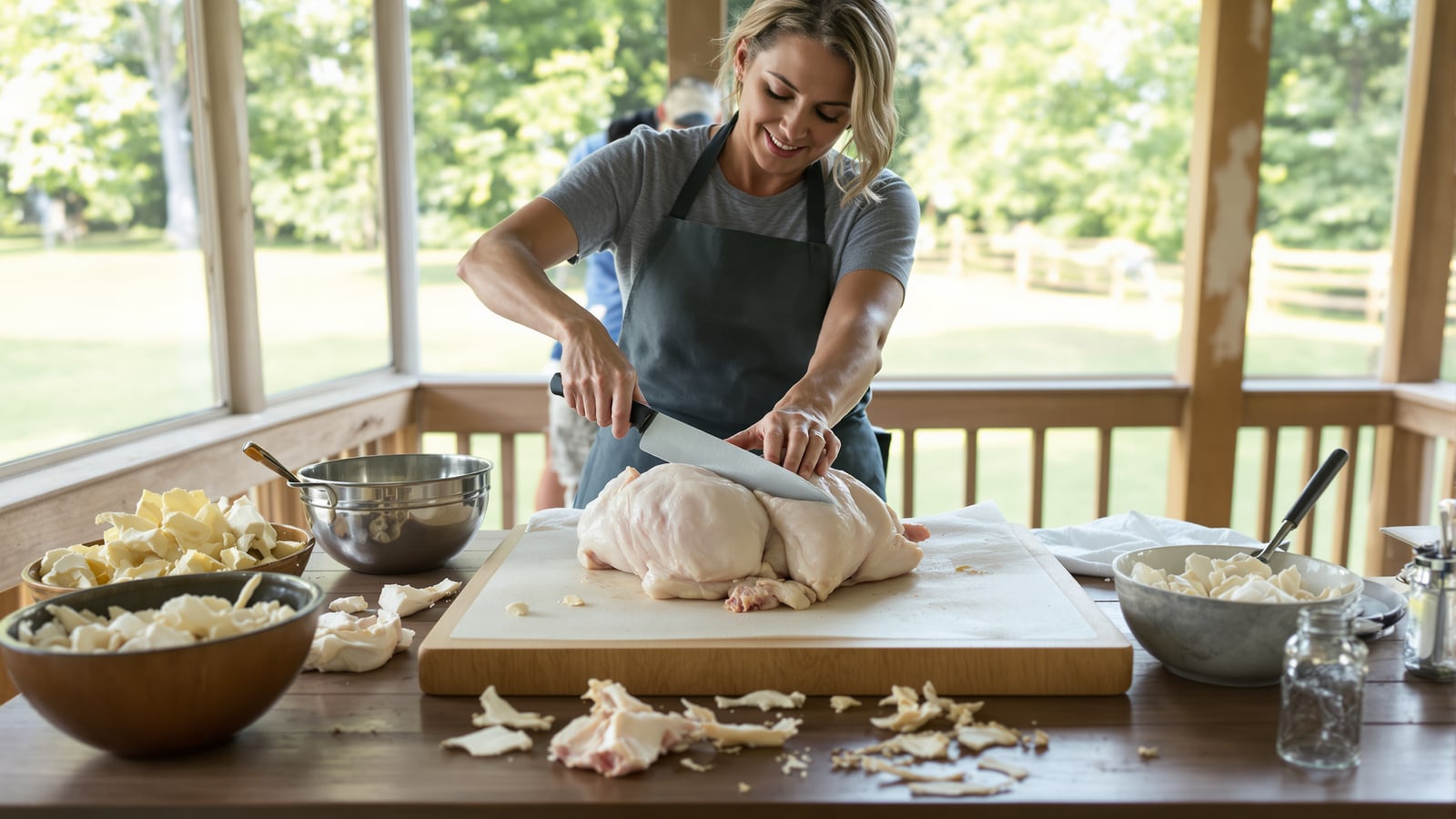
Quick answer: Cut the bird into eight pieces plus a back. Cook the legs and thighs tonight and the breasts tomorrow, or the other way around. Roast the bones for stock and save the fat. The skills are a clean cut at each joint and a refusal to throw anything away.
A whole chicken usually costs less per pound than the same bird sold in parts, and the butcher's markup is paid for work you can do in ten minutes. That's reason enough. The better reason is that once you've cut one, you stop seeing dinner as a package and start seeing it as material.
Set up before you touch the bird
Get a sharp knife. A dull one slips on skin, and a slipping knife is how you spend the evening in urgent care. If yours is tired, sharpen it first. A pair of kitchen shears helps too, but it's optional.
Use a big board with something under it so it doesn't skate. Pull the chicken out of the fridge only when you're ready to cut. A cold bird is firm and easier to handle. A room-temperature one is greasy and floppy.
Pat it dry with paper towels. Don't rinse it in the sink. Rinsing doesn't remove what you're worried about and it sprays raw-chicken water across your counter. Keep a bowl for scraps and a second one for bones.
The cuts, in order
Legs first. Pull one leg away from the body and slice through the skin where thigh meets breast. Bend the leg back until the hip joint pops out of its socket. Cut through the joint, then run the knife along the backbone to free the oyster, the small round nugget of meat in the hollow of the back. Most people leave it behind. Don't.
Split the thigh from the drumstick. Find the line of white fat and a thin vein across the knee joint. Cut right there. If you hear a crunch, you hit bone. Slide the blade a quarter inch and try again.
Wings. Pull the wing out, find the joint where it meets the breast and cut through. Same story: you're cutting joints, not bone.
The breast. Cut down along one side of the breastbone, then keep the blade tight against the rib cage and peel the meat off in one piece. Do the other side. Whatever you can't see is still on the carcass, so run your thumb along the bones and pick off the strips.
The back. What's left is the carcass. If you want the back separate, cut along the spine with shears. It goes to the stock bag, along with the wing tips and neck.
You now have two breasts, two thighs, two drumsticks, two wings and a frame. That's eight pieces and a pot's worth of flavor.
Where it goes wrong
- Hacking through bone. You'll feel the resistance. Stop, probe with the tip of the knife until you find the gap, and cut there. Bone dulls an edge faster than anything else on your board.
- Leaving meat on the frame. The first time, you'll leave a surprising amount behind. That's what stock is for, so it isn't wasted. Still, get the oysters.
- Cooking all eight pieces the same way. Breast and thigh are different animals. Breast dries out near 165°F, which is the safe temperature. Pull it at 160°F and let it coast while it rests. Thighs and drumsticks are better at 175°F or higher, because the connective tissue needs the heat to go soft. Check with a thermometer, not a guess.
- Cross-contamination. Raw chicken touches the board, your hands and your knife. Wash all three in hot soapy water the moment you're done, wipe the counter, and don't use that board for bread. Leave the kitchen cleaner than you found it.
Every part gets two jobs
This is the system. Each piece has a first life and a second.
Breasts. First life: sear them in a hot pan, skin side down for about five minutes before you flip, or roast them. Second life: slice the leftover cold for sandwiches or chop it into salad. Cooked breast meat doesn't reheat well, so don't try. Eat it cold on purpose.
Thighs and drumsticks. First life: roast skin-on at 425°F until the skin shatters. Second life: pull the leftover meat off the bone for tacos, fried rice or soup. Dark meat reheats better than white, so these are your Wednesday insurance. It's the same idea as cooking components, not meals.
Wings. First life: roasted hot with salt, a good snack while you're still cooking. Second life: the bones go into the stock bag after the meat is gone.
Skin and fat. Trim loose skin and the fat pads near the cavity. Render them slowly in a small pan over low heat until the fat runs clear and the skin turns into crisp bits. Strain the fat into a jar. That's schmaltz. Fry eggs in it. Roast potatoes in it. Eat the cracklings with salt before anyone sees them.
Heart and liver. If the bag of giblets is tucked inside, the liver and heart are good sautéed in butter with onions. Keep the liver out of the stock, though. It turns the pot bitter and cloudy.
The carcass. First life: stock. Second life: whatever the stock becomes, soup, rice cooked in it, or a pan sauce on the next night's chicken.
Stock without the fuss
Put the frame, neck, wing tips and any bones from tonight's dinner into a pot. Add a halved onion, a carrot, a stalk of celery and a few peppercorns. Cover with cold water by an inch.
Bring it up slowly and keep it at a bare simmer, with bubbles barely breaking the surface, for three to four hours. A hard boil makes it cloudy and greasy. Don't salt it yet. Salt it when you use it, since you may reduce it later and salt concentrates.
Strain, cool it fast by setting the pot in a sink of cold water, and get it into the fridge within two hours. It keeps three or four days, longer frozen. If you don't have time to make it right away, freeze the bones in a bag and make stock once you've got two carcasses. It's better that way anyway.
If you want a method for the first night's dinner, the Sunday roast works for any piece that's big enough to roast.
What a week looks like
Sunday: break down the bird, roast the legs and thighs. Eat well, strip the leftovers into a container, and put the bones in the pot. Monday: breasts, seared, with the rendered fat for the vegetables. Tuesday: sliced cold on bread. Wednesday: soup from the stock and the shredded dark meat, with rice.
One bird. Four meals, and a jar of fat that makes everything after it taste like you know what you're doing.
The first one takes thirty minutes and you'll cut it badly. The fifth takes ten. Teach the kids on the second one, and hand them the shears.
Wes Dunbar
Country & Skills
Grew up on an acreage and never quite left. Covers trucks, trades, land, and how to do the thing yourself.

Watch
Worth an hour of your evening
More from Food.
From channels we rate. Plays on YouTube.
Read next