

Cold pan, chicken skin, and the fat you've been throwing out
Start skin-on thighs in a cold skillet and let them do the work. You get shatter-crisp skin, a jar of schmaltz, and the best vegetables you'll cook this week.
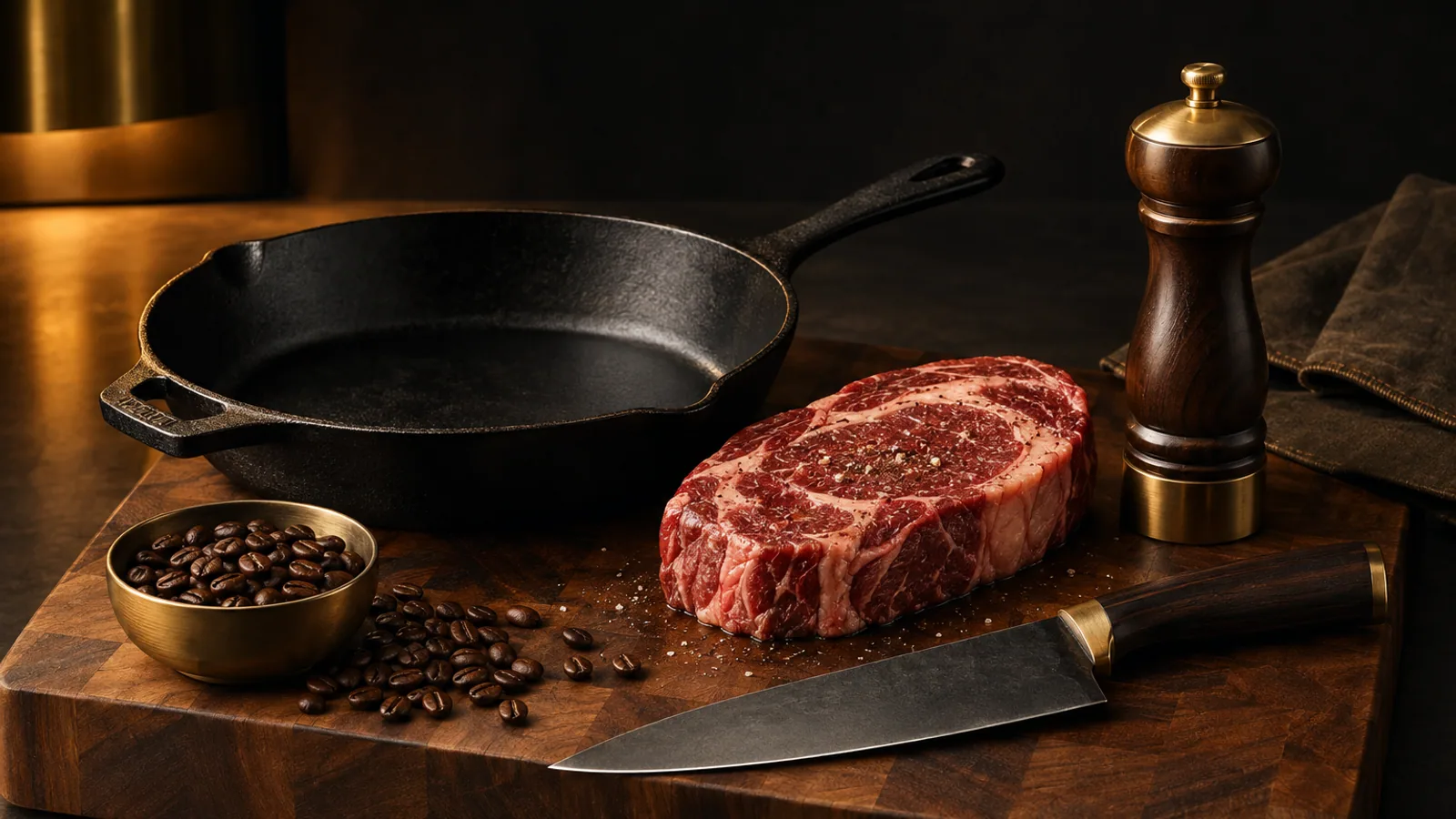
Quick answer: Put skin-on, bone-in chicken thighs skin-side down in a cold skillet with no oil. Turn the heat to medium-low and leave them alone for 15 to 20 minutes. Pull the chicken, keep the fat, and cook your vegetables in it.
Most people get this backward. They heat the pan until it's screaming, drop the chicken in, and hear a satisfying roar. That roar is the skin seizing up. It tightens, scorches on the outside, and keeps most of its fat locked inside, so you get something dark on top and rubbery underneath.
A cold pan fixes it. Fat needs time to melt before the skin can crisp. Give it that time and the skin ends up frying itself in its own grease.
Buy the right piece
Bone-in, skin-on thighs. Breasts work, but they dry out long before the skin finishes, and you'll end up choosing between crisp skin and juicy meat. Thighs are cheaper, forgiving, and carry more fat. Dark meat is also better at 175°F or so than at the 165°F the USDA lists as safe, because the connective tissue needs the extra heat to relax.
Pat them dry. Then pat them again. Water on the skin turns to steam, and steam is the enemy of crisp.
If you've got the time, salt them with kosher salt and set them uncovered on a plate in the fridge for a few hours or overnight. The surface dries out and the salt seasons the meat. If you don't have the time, dry them well and salt right before they hit the pan.
The cold-pan method
Use a 12-inch skillet. Cast iron is ideal because it holds an even heat, but stainless works too.
- Lay the thighs skin-side down in the cold, dry pan. Leave a little room between them. Crowding makes steam.
- Turn the burner to medium-low.
- Press down on each thigh with a spatula for the first minute or two so the skin makes full contact.
- Then walk away. Don't poke, lift, or peek for at least 12 minutes.
- Around the 15 to 20 minute mark, the skin turns deep gold, the fat pools around the thighs, and the chicken lets go of the pan on its own.
That last part is your signal. If you try to lift a thigh and it sticks, it isn't done. Give it another few minutes. Forcing it tears the skin and leaves your best part welded to the pan.
Flip the thighs and cook the meat side for 8 to 10 minutes. Or slide the whole skillet into a 400°F oven until a thermometer in the thickest part, away from the bone, reads 175°F. Move the chicken to a rack, not a plate. A plate traps steam under the skin and undoes twenty minutes of work.
Now the fat
Look in the pan. That's schmaltz, and for most people it's what gets rinsed down the drain.
Pour off most of it into a heatproof jar, leaving about two tablespoons in the skillet. Strain the jarred fat through a fine mesh sieve if there are burnt bits. Let it cool, cap it, and put it in the fridge. It'll keep for a couple of weeks, and longer in the freezer.
Don't wipe out the brown bits stuck to the pan. That's flavor. If any of it is black rather than brown, scrape those pieces out, but leave the rest.
Cook the vegetables in it
Turn the heat to medium and add vegetables to the fat. What you use decides how long it takes.
- Brussels sprouts: Halve them and lay them cut-side down. Leave them for 6 to 8 minutes until the flat sides are dark brown, then shake the pan and give them a few more minutes.
- Carrots: Slice them thin on a bias, about a quarter inch. They'll take 10 to 12 minutes and caramelize at the edges.
- Cabbage: Cut wedges through the core so they hold together. Brown each cut side, then lower the heat and cover for a few minutes to soften.
- Potatoes: Dice them half an inch or smaller. Use the fat, add them to the skillet, and roast in a 425°F oven for 20 to 25 minutes, stirring once. On the stovetop they scorch before the centers soften.
- Onions: Slice them thick, cook them low, and take your time.
Go light on the salt. The chicken and skin are already seasoned, and the fat concentrates it. Taste first.
Add the vegetables to the same skillet the chicken came out of, so the browned bits lift into them. A splash of water or a squeeze of lemon at the end loosens anything stuck and brightens the whole pan.
What goes wrong
Rubbery skin. The pan was too hot, the skin was wet, or you flipped early. Most of the time it's the heat. Medium-low feels like you're wasting time, and you aren't.
Burnt skin, pale meat. Same cause, opposite side of the problem. If the skin is darkening faster than the fat is melting, turn the burner down.
Soggy skin at the table. You covered it, or you piled the chicken on top of wet vegetables and let it sit. Plate the vegetables first and set the thighs on top just before serving. Don't put a lid on anything.
Leftovers. Cold skin goes soft in the fridge. There's no getting around it. Reheat the thighs on a rack in a 425°F oven for about ten minutes, and the skin comes back most of the way. The microwave will ruin it.
Too much grease. If the vegetables look swimming, you left too much fat in the pan. Spoon some out and put it in the jar. Two tablespoons for a skillet of vegetables is plenty.
Make it part of the week
This works well in a cook-components-not-meals routine. Render a pan of thighs on Sunday, keep the schmaltz, and you've got fat for the rest of the week. Fried eggs in it are better than eggs in butter. Rice cooked in a spoonful of it tastes like it came from a better kitchen.
And if you're planning a bigger Sunday dinner, the same logic applies to a roast that leaves your afternoon alone. Save the drippings and use them the same way.
Stop peeling the skin off your chicken and throwing it out. You've been trashing the best part of the dinner and paying for the privilege.
Wes Dunbar
Country & Skills
Grew up on an acreage and never quite left. Covers trucks, trades, land, and how to do the thing yourself.

Watch
Worth an hour of your evening
More from Food.
From channels we rate. Plays on YouTube.
Read next