

Your stove didn't quit in the cold. Your fuel choice did.
Most cold-weather stove failures are physics you can plan around. Pick the fuel for the temperature, then deal with the wind.
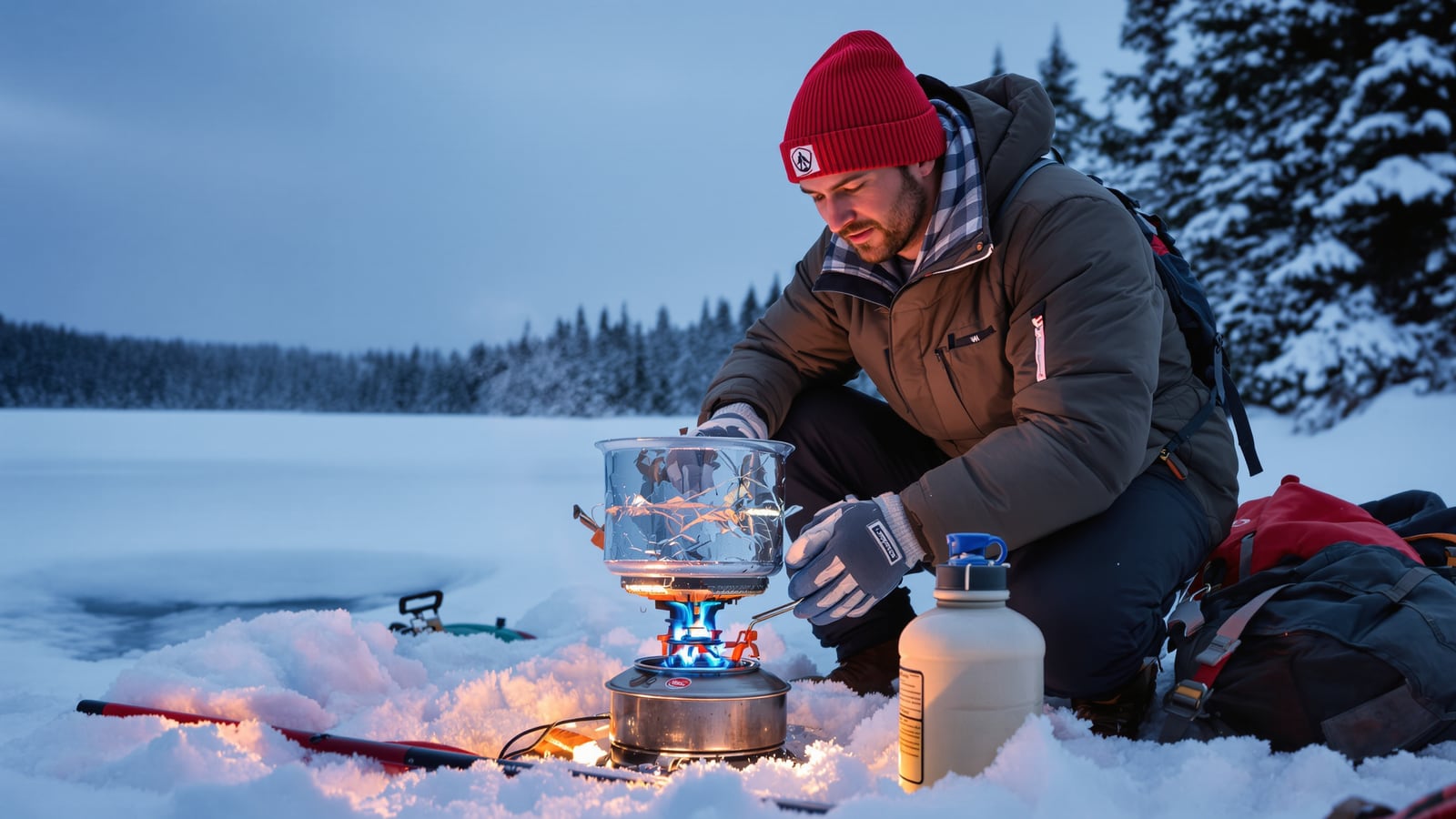
Quick answer: Above freezing, a canister stove with a windscreen is fine. Well below freezing, buy a liquid-fuel stove or a canister stove with a remote feed that lets you run the canister upside down. In any weather, wind will beat you before the cold does.
It's 18 degrees and the flame is a whisper
You're standing at camp with numb fingers and a pot of water that was supposed to be coffee ten minutes ago. The stove worked fine in the driveway. Now the flame is weak and shrinking, and you're about to blame the stove.
Don't. The stove did what stoves do. The fuel inside the canister stopped turning into gas fast enough.
Canister fuel is a liquid under pressure, and the stove burns the vapor above it. Cold drops the pressure. Different fuels give up at different temperatures:
- Normal butane boils at about 31°F. Below that, it barely vaporizes at all.
- Isobutane boils at about 11°F.
- Propane boils at about -44°F, which is why it's the reason winter canister blends work at all.
Most backpacking canisters are an isobutane and propane mix. Propane burns off first, so the canister gets worse as you use it. The last third of a cold canister is where the trouble starts.
Look at the label before you buy. A canister that's mostly butane is a summer product.
What to buy, by how cold you'll be
Above about 25°F, overnight trips: A standard canister stove is fine. The MSR PocketRocket is the familiar small one. Jetboil's integrated systems are the other common choice, and they boil water fast because the pot wraps the flame.
Colder than that, or anywhere you're melting snow for days: Get a liquid-fuel stove. The MSR WhisperLite and its relatives burn white gas, which doesn't care if it's 30 below. The fuel sits in a refillable bottle you pump to pressurize. It's heavier, louder and fussier. You have to prime it. It simmers poorly. You'll also learn to clean the jet.
The trade-off is real, and plenty of sensible people stay with canisters. If your winter trips are a single night near the truck, a canister you've managed carefully will do the job. If you're two days from a road, take the liquid-fuel stove. It's the one that keeps working.
The middle option: Some canister stoves sit apart from the canister on a hose, and a few of those let you invert the canister so liquid fuel feeds the stove directly. The stove vaporizes it itself. Cold matters far less. But only do this with a stove built for it. Flip a canister under a stove that sits on top of it and you'll get a fireball.
Keep the canister warm
If you do run canisters in the cold, treat them like the batteries they nearly are.
Sleep with tomorrow's canister in your bag, at your feet or in the stuff sack with your boots liner. During the day, ride it in an inside jacket pocket. When you cook, set it on a square of closed-cell foam instead of snow or frozen dirt. The ground steals heat before the air ever does, and a canister is no different from you.
Warm it in your hands if it's sluggish. Never warm it over the flame. That's how canisters fail badly.
For the same reason, never wrap a windscreen tightly around a canister that sits directly under the stove. The screen traps heat on the canister. A canister that overheats can rupture. Screens belong around the pot and burner on a remote-feed stove, or you use the shroud the maker built in.
Wind is the real stove killer
A stove can be perfectly fueled and still do nothing. Wind blows the flame sideways and carries the heat past your pot. Water that boils in four minutes in still air can fail to boil at all in a steady gust.
Fix this before anything else:
- Cook in the lee of a boulder, a log, a bank of snow or your pack.
- In snow, dig a pit knee-deep and cook from the bottom. You get a wall on every side.
- Use a real windscreen with a liquid-fuel stove or a remote-feed canister stove. Aluminum foil bent into a ring will work in a pinch.
- Put the lid on. It's the cheapest fuel saver there is.
Plan on a gap between what you carried in summer and what you'll need now. Melting snow eats fuel, and cold pots take longer. Take more than you think. Running dry on day two of a cold trip is a safety problem, not an inconvenience, because hot water is how you rewarm.
The tent rule has no exceptions
Cold and wind tempt people to cook inside the tent or in the vestibule. Don't do it.
Burning stoves make carbon monoxide, and a closed tent is a bad place to breathe it. Priming a liquid-fuel stove also throws a big flame, and tent fabric burns. Cook outside, even if it's miserable. If anybody in your group gets a headache, nausea or goes confused near a running stove, get them into fresh air and get medical help right away.
Test it before it matters
Do this at home. The night before a trip, put a canister in the freezer for an hour. Then take your stove into the yard and try to boil a liter of water, with whatever wind there is. See how long it takes, and how the flame looks. Do it with gloves on, because that's the part you forget.
Light a liquid-fuel stove at home too, even if you've owned it for years. Fuel gets stale. Jets clog. Pump cups dry out. A stove that comes out of a closet in December without a trial run is a gamble.
Bring a backup ignition. Piezo igniters die in cold and damp. A lighter you've kept in your pocket works better than one you left in the pack. Carry matches in a waterproof case as well.
Handle white gas with gloves on in deep cold. It evaporates fast, and it can damage bare skin on contact when it's that cold.
Leave the spot clean
Pack out every empty canister. They don't burn and they don't belong in a fire ring. Don't pour leftover fuel on the ground. Take the foil screen home. When you dig a snow kitchen, fill it back in. If you cook on bare ground, check for scorch marks and scrape off any spilled fuel residue before you go.
If conditions turn on you and you can't get a flame, that's your cue to move. The same thinking applies to picking a campsite you can bail from in forty minutes, and to knowing how to read the weather before it reads you. A cold meal is annoying. A cold night with no way to make hot water is where trips go wrong.
Buy the stove for the coldest night you'll plausibly see, not the average one. Then go cook something warm.
Wes Dunbar
Country & Skills
Grew up on an acreage and never quite left. Covers trucks, trades, land, and how to do the thing yourself.

Watch
Worth an hour of your evening
More from Outdoors.
From channels we rate. Plays on YouTube.
Read next