

The Circle Your Dog Makes Before Bed Tells You Something
Most dogs spin two or three times and drop. Learn what's normal for yours, and the spin becomes a free nightly check on his comfort.
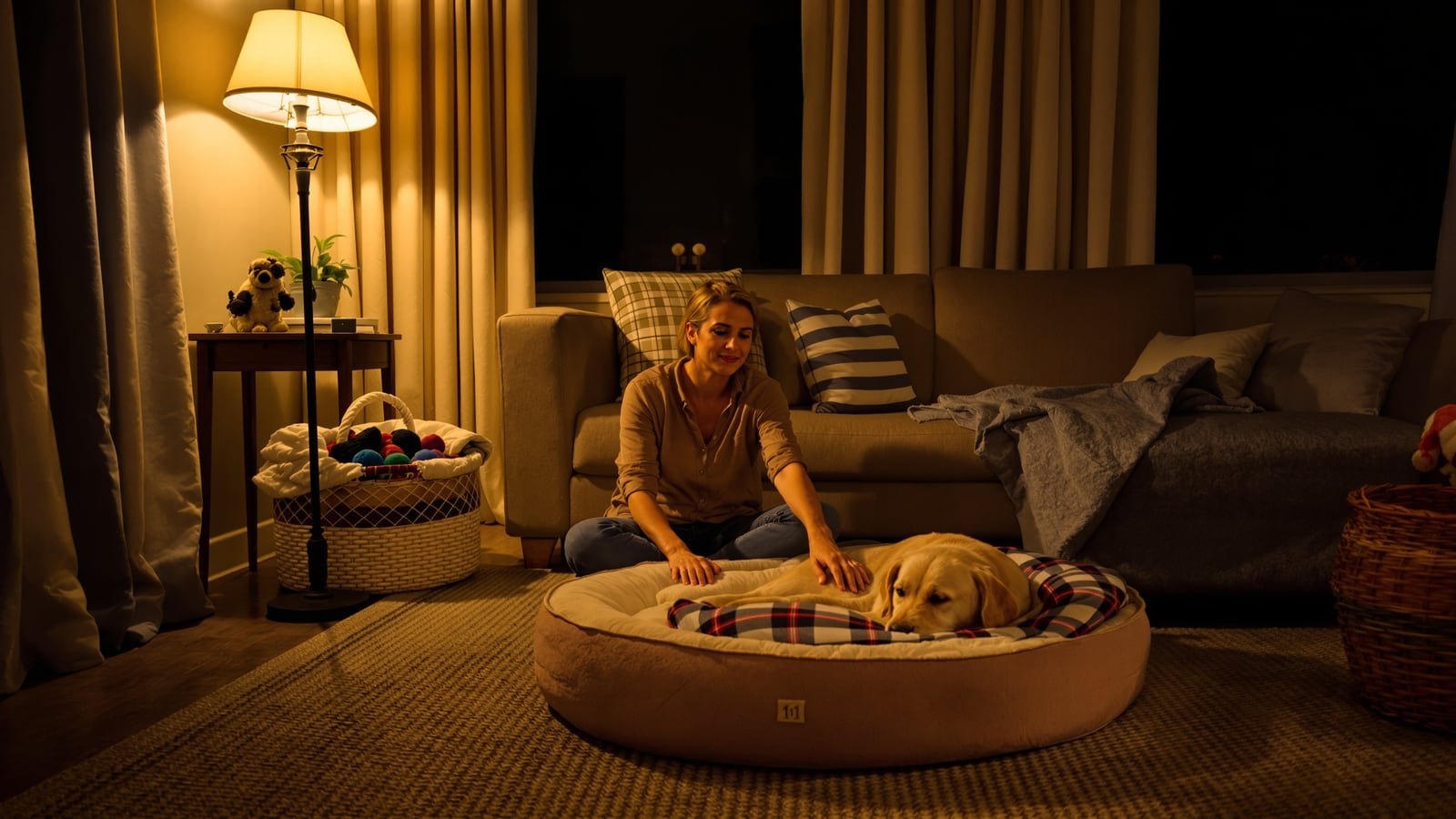
Quick answer: Spinning before lying down is normal dog behavior, almost certainly inherited from wild ancestors who tramped down a bed in grass and snow. Your job isn't to stop it. Learn how many turns your dog usually takes. When that number changes, or he can't settle at all, call your veterinarian.
What he's doing, as best anyone can tell
Nobody has put a dog on the stand and asked. The explanations are educated guesses, and they all point the same direction.
Wild canids flatten tall grass, leaves and snow before they sleep. It makes a level spot, pushes out anything hiding in the cover, and gives a rough lookout position. Dogs also have scent glands between their toes, so some of the circling may be a dog marking his own bed. And a dog lining himself up for wind, exits and the family's footsteps is doing what his ancestors did.
Your Lab doesn't need any of this on a memory-foam bed in a climate-controlled living room. He does it anyway. Instinct doesn't read the lease.
Where this tells you about comfort
The spin is a ritual, and rituals have a length. One dog does a quick half-circle and flops. Another does three tight turns, a paw rake at the blanket, then a heavy sigh. Both are fine. What matters is what's normal for yours.
Take a week and just watch. Note how many turns, which direction, how long until he's fully down, and whether he gets up again in the first ten minutes. You're building a baseline. It costs nothing and takes no more than a glance.
Then read the surface he chooses:
- Spins and digs at a blanket: He's nesting. Give him one worth nesting in.
- Spins, lies down, shifts, repositions, shifts again: The surface isn't working. Too hard, too small, too cold, or sitting in a draft.
- Skips his bed and takes the tile or the hardwood: Often he's too warm. Dogs run hotter than we do, and a cool floor is a legitimate choice. It's also worth knowing if he's choosing the floor because the bed is lumpy or too small.
Fix the bed before you blame the dog
A dog needs room to turn and then room to stretch out. If he has to fold himself into the bed like a lawn chair, it's too small. Size up. Dogs that sleep curled do well with a bolster edge to lean against. Dogs that sprawl want a flat, wide pad.
Put it somewhere he can see the household without being in the traffic lane. Away from the door and the heating vent. Near you, if you've got any sense of what a dog wants. He's a pack animal, and a bed in an empty room is a lonely bed.
On slick floors, put a rug under the bed. A dog that slides while turning learns to dislike turning, and a large or older dog can strain himself going down. Thick foam beats a thin pad every time for big dogs and seniors. Wash the cover weekly. A bed that smells like a dog is a bed he'll use, but you still don't want it ripe.
And hold the line on the couch cushions. If he's spinning and digging at the furniture, don't scold him for his instincts. Walk him to his bed, reward him when he lies down on it, and repeat until it sticks. This is the same patience as the first seven days with a new puppy, and it works at any age.
When the spin changes
A change in routine is information. A dog who always spun twice and now spins eight times isn't being quirky. Something is making it hard to find a position that doesn't hurt.
Watch for these:
- More turns, more false starts. He circles, starts to lower, then stops and circles again. He may be bracing for a sore hip, knee or back.
- Hesitating or whimpering as he goes down. The lowering is the painful part for joints. Arthritis is common in older dogs and often shows up here before it shows up as limping.
- Getting up and down all night. Restless nights in an older dog can be pain, and sometimes confusion. Dogs can develop an age-related cognitive decline that disrupts sleep, and pacing in the evening is one sign. Your vet can sort out which it is, and there are things they can do. What an old dog actually needs from you covers the rest of the picture.
- Spinning without ever settling. If he circles, paces and can't lie down, take it seriously.
The two situations that aren't about the bed
Some dogs, especially deep-chested breeds like Great Danes, Weimaraners and German Shepherds, can suffer bloat, where the stomach swells and can twist. The signs include restlessness, pacing, drooling, a tight swollen belly and retching that brings nothing up. A dog that can't get comfortable and shows any of those signs needs a veterinarian or an emergency animal hospital right away, not in the morning.
Circling is also different from spinning before bed. A dog that walks in circles in one direction while awake, tilts his head, stumbles or seems disoriented has a medical problem until a professional says otherwise. Get him seen the same day.
Short of those, a changed spin is a reason to book an appointment, not to panic. Tell the vet what you've noticed. "He used to turn twice and now it's six, and he groans going down" is a better description than most owners give, and it points the exam in a useful direction. Only a veterinarian can say what's behind it and what to do.
Don't talk yourself out of the normal
Be fair to the dog. Plenty of dogs spin a lot their whole lives with nothing wrong. Some spin more when they're wound up after a good run or when company has just left. A single odd night with a lot of turns, followed by a normal morning, usually isn't much. The pattern matters, not the single event.
And a dog that spins a few times and thuds down with a groan of pure satisfaction is telling you the day went well. Let him have it. Leave his bed clean, his water fresh and his spot undisturbed.
He's been giving you a nightly report on how his body feels for years. You just have to count.
Wes Dunbar
Country & Skills
Grew up on an acreage and never quite left. Covers trucks, trades, land, and how to do the thing yourself.

Watch
Worth an hour of your evening
More from Dogs & Pets.
From channels we rate. Plays on YouTube.
Read next