

Watch the dog, not the bowl, when dinner goes untouched
A skipped meal means little by itself. What the dog does next tells you whether to wait it out or get in the truck.
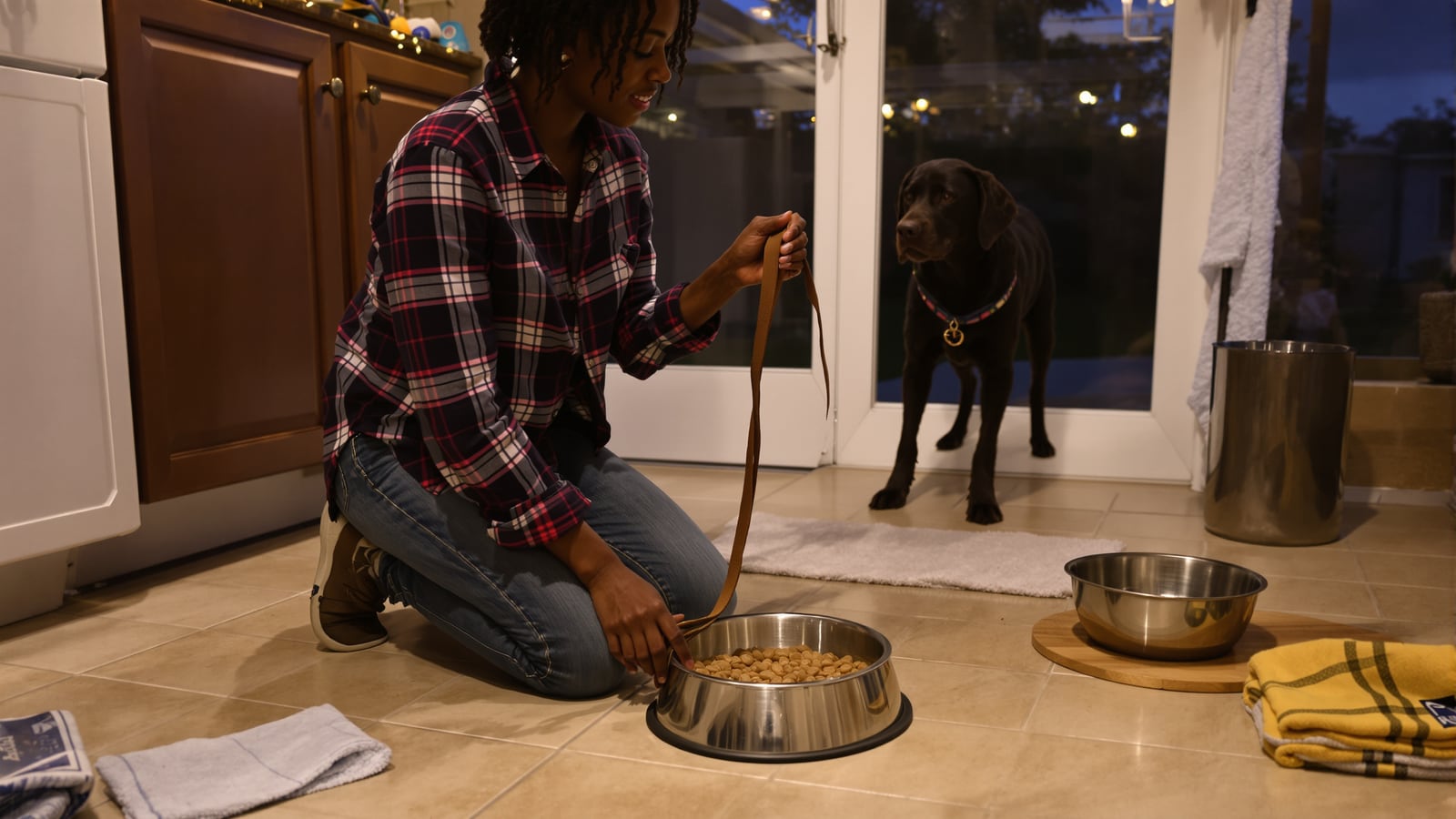
Quick answer: A healthy adult dog who skips one meal but acts normal can usually be watched for a day. A dog who skips food and also vomits repeatedly, seems lethargic or in pain, or has a swollen belly needs a vet now, not tomorrow.
Your Lab inhales dinner in forty seconds. Tonight the bowl sits full and he walks away from it. Your stomach drops a little.
Slow down. The bowl is only one clue, and not the best one. The best one is the dog.
Look at the dog first
Before you decide anything, spend two minutes on him. Is he alert? Does he get up when you pick up the leash? Is his tail doing what it normally does? Does he want water? Has he gone to the bathroom normally?
A dog who skips supper but still wants a walk, still greets you at the door and still drinks is giving you a very different message than a dog who hides under the bed and won't look at you.
Write the time down. Note when he last ate, what he last ate, and anything out of the ordinary that day. You'll want those details if you end up on the phone with a vet.
The dull reasons that usually explain it
Most skipped meals have boring causes.
- Heat. Dogs eat less when it's hot. Read what heat and cold actually do to dogs if you're not sure how much is too much.
- Too many extras. A dog who got half a sandwich, a handful of jerky and the crust off a kid's plate isn't hungry at six o'clock. That's on you, not him.
- Stress. A move, houseguests, a trip, a new baby, fireworks, a kennel stay. Dogs read the house, and when the house changes, appetite often does.
- A food change. Switch brands overnight and some dogs simply refuse. Mix the new into the old over a week or so.
- Boredom with the same bowl. Real, but less common than people think, and you should rule out everything else before you decide your dog is just picky.
If the dog seems fine and one of these fits, a skipped meal or two isn't an emergency.
The signs that mean go now
Some combinations don't wait for the morning. Call your vet or the nearest emergency clinic right away if a dog who won't eat also shows any of these:
- A swollen, tight or hard belly, especially with retching that brings nothing up, drooling, pacing or restlessness. This can be bloat, which is an emergency in deep-chested breeds and can turn fatal fast. Don't wait to see if it passes.
- Repeated vomiting, or vomiting he can't keep water down through.
- Known or possible swallowing of something that shouldn't be swallowed. A sock, a corn cob, part of a toy, string. Also anything toxic: chocolate, grapes or raisins, anything sweetened with xylitol, medications. Call before symptoms show. Don't wait for them.
- Pale or gray gums, labored breathing, collapse or sudden weakness.
- A hunched stance, whining or crying when you touch his belly, or a dog who stands with front legs down and rear end up and won't settle.
- Straining to urinate or no urine all day.
- Blood in the vomit or stool, or black, tarry stool.
- A puppy or a very small dog who stops eating. Young and tiny dogs have little reserve and can go downhill quickly. Don't give them a full day.
You don't have to diagnose any of it. That's the vet's job. Yours is to recognize the pattern and make the call.
Dogs who don't get the 24-hour grace
The "watch him for a day" rule is for a healthy adult dog in good shape. Skip it for:
- Puppies and toy breeds
- Senior dogs, who can decline faster than they look. What an old dog actually needs from you covers the rest of that.
- Dogs with diabetes, kidney disease or any other condition that already has a vet's attention
- Any dog on medication that has to be given with food
- A dog who's already been off his food for a few days
For all of these, call the same day. A receptionist or tech can often tell you in two minutes whether to come in.
What to try at home, and what to leave alone
If he's bright and alert and you're just waiting to see, a few sensible things are fine. Put his normal food down for fifteen to twenty minutes, then pick it up. Offer fresh water. Skip the treats. Don't spend the evening hand-feeding him from the table, because that teaches him how to get what he wants.
Warming his regular food slightly can bring out the smell and tempt some dogs. A spoonful of plain, cooked chicken or plain white rice is a common thing owners do, but ask your vet first if you have any doubt, especially with a dog who has a sensitive stomach or a medical condition.
What to leave alone: human medicine of any kind, big changes of food, and a pile of new treats to coax him. Don't give pain relievers made for people. Several are dangerous to dogs.
When he's just picky, and you made him that way
This is the part nobody likes hearing. If your vet has cleared him and he's still turning up his nose, there's a decent chance he's learned that holding out gets him something better.
The fix is dull and it works. Same food, same times, same spot. Bowl down for fifteen minutes, then it goes up. No bacon on top the next time he refuses. A healthy adult dog won't starve himself over a boring dinner, but he'll absolutely test you, and most owners fold first.
Serve your dog well, and hold the line. Those two things aren't in conflict. If you're still not sure what's in the bowl, what the dog food bag is actually telling you will help you decide whether the food is the problem.
What to say when you call
Keep it short and have the facts ready:
- Age, breed, approximate weight
- When he last ate normally and what it was
- Anything he might have gotten into
- Vomiting, diarrhea, drinking, urinating, energy
- Any medications or existing conditions
Then do what they tell you. If they say come in, come in. If they say watch him, ask exactly what would change that advice, and write it down.
One more thing
You know this dog better than anyone. When a dog who's eaten with gusto for six years suddenly won't touch his dinner, and something in your gut says it's off, trust that. A vet visit that turns out to be nothing costs you an hour and an exam fee. Waiting on a real emergency can cost far more. If cost is what's making you hesitate, when pet insurance pays and when it's a waste of money is worth reading before the next scare, not during it.
Pick up the phone. That's what a good owner does.
Wes Dunbar
Country & Skills
Grew up on an acreage and never quite left. Covers trucks, trades, land, and how to do the thing yourself.

Watch
Watch how it's done
Picked for this article.
From channels we rate. Plays on YouTube.
Dogtor Pete
Why Did My Dog Stop Eating? | Loss Of Appetite In Dogs | Veterinarian Explains | Dogtor Pete
Dr Alex Crow
Is Your Dog Sick? Not Eating Anything? Urgent Vet Suggestion! | Dr. Alex Crow | PetHealthGuru |
Read next