

When the Water's Crowded, Move. Here's How to Know When
Pressured fish don't vanish. They get quiet. Learn to tell a slow day from a picked-over spot, and what to do in the next hour.
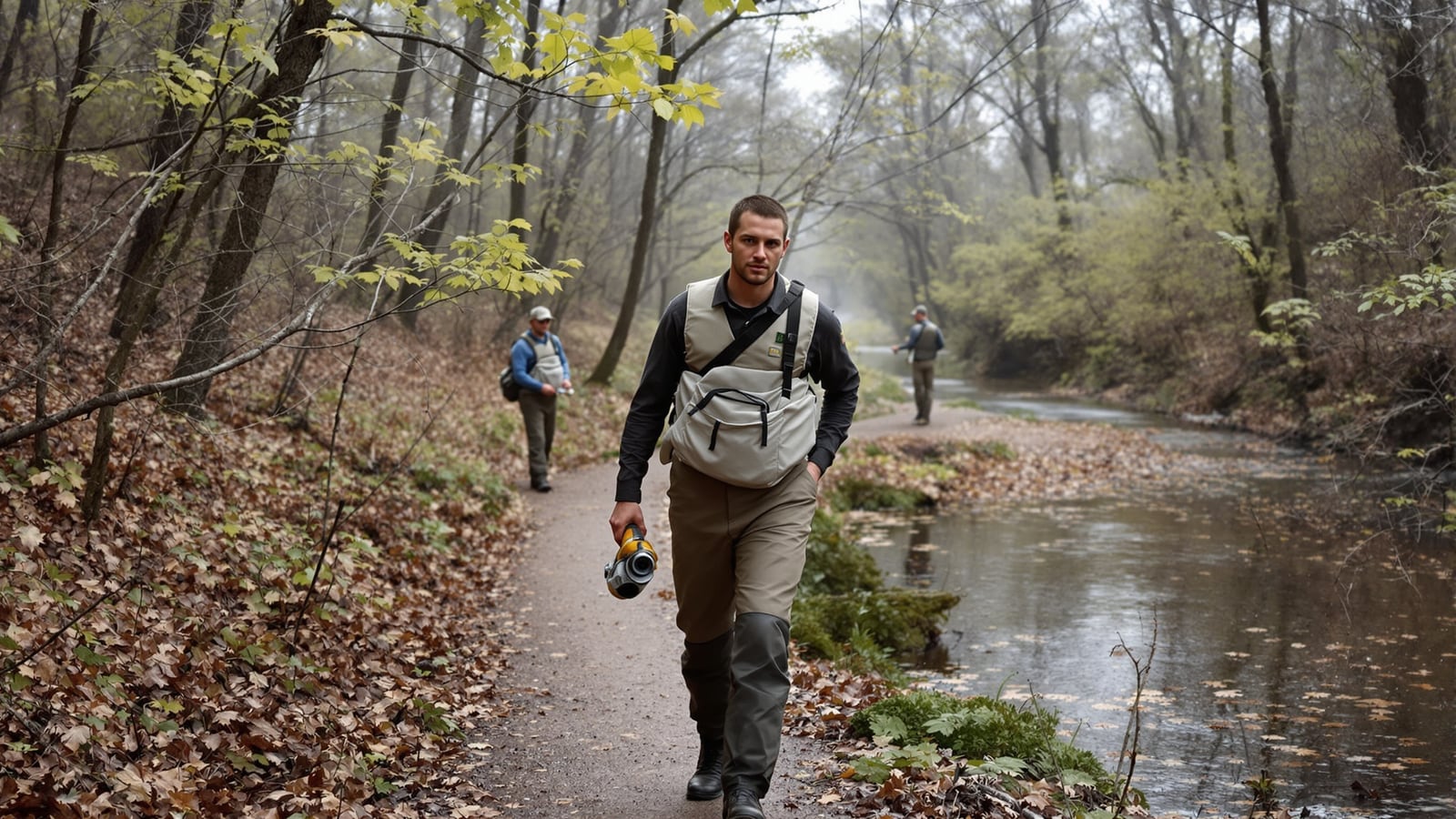
Quick answer: Give a crowded spot one honest hour. If nobody near you is catching and you're casting at fish that ignore everything, leave. Go four hundred yards past the last parked truck, change your depth, or come back on a weekday.
The parking lot is a weather report
You pull in at 5:40 a.m. on the second Saturday of the season and count eleven trucks at the ramp. Three more boats are idling at the dock. Every rod-width of bank below the dam has a man standing on it.
That crowd is telling you two things. The fishing was good recently, or the calendar says it should be. Neither one means it's good right now.
Word travels. A hot bite last weekend fills the lot this weekend, and by then the fish have spent seven days looking at lures. Crowds are a report on yesterday.
Pressured fish don't leave. They shut up.
Anglers assume the fish moved off. Mostly they didn't. They tucked tighter under the cut bank, slid out to deeper water, or sat in the shade of a log and stopped chasing anything that looked like what they'd seen forty times.
Stocked trout show it fastest. In a put-and-take stream, the first days after a stocking truck leaves are a party. By the following weekend the survivors have learned what a spinner's flash means. Clear-water bass do the same thing, only slower. A big largemouth that's been hit with a white spinnerbait every weekend since April will watch it go by like a man ignoring a telemarketer.
So the fish are still there. They've just quit being generous. Your job is to find fish that haven't been taught that lesson yet.
The one-hour test
Don't bail after ten minutes because the guy beside you got skunked. Don't stay till noon on pure stubbornness either. Run a quick test:
- Look around. If nobody within a hundred yards has a bent rod in the first hour, the spot is cold or picked over.
- Change one thing. Smaller lure, lighter line, different depth. If you've tried two real changes and gotten nothing, it isn't you.
- Watch the water. Rises, swirls, baitfish jumping. If you see fish and can't buy a bite, they're pressured. If you see nothing at all, they may be somewhere else entirely.
Fish showing but not biting means change your presentation. A dead spot means move. Learn the difference and you'll waste a lot fewer mornings.
Four ways to move, in order of effort
Distance. Most anglers fish within a short walk of where they parked. Take that as fact. The bank a quarter mile past the last access point gets a fraction of the lures. Carry less, walk farther, and wade across to the side nobody can reach. On a lake, a kayak makes this almost unfair, and Kayak Fishing Without Going Swimming covers how to do it without becoming a cautionary tale.
Depth. The pack fishes the obvious band of water: the shallow flat, the first drop-off, the riffle right below the pool. Go one step off. If everyone's throwing at the bank, fish the first deep break. If everyone's deep, try the shade line in three feet. A sonar unit helps you see where fish really sit, and Read a Fish Finder Right and Skip the Features You Won't Use will keep you from paying for screens you'll never read.
Time. Pressure has a clock. Most people arrive after sunrise, leave by lunch, and skip the last hour of light. Fish the first thirty minutes before the crowd settles, or the last ninety after it thins out. Cold, wet, ugly weather scares off half the field and rarely bothers the fish.
Day. A Tuesday morning on the same water is a different lake. If your schedule bends even a little, a weekday beats any lure you can buy.
The seasons that pack the bank
A few dates reliably put a crowd on the water. Know them and you can plan around them:
- Opening day. Trout and walleye openers, wherever your state or province holds them, draw people who haven't fished since last year. Fish are fresh and so is the traffic.
- Stocking weeks. Many agencies post stocking schedules online. Fish a few days after, not the day of, and walk away from the stocking point.
- Spawn. Bass, crappie and bluegill move shallow and get easy to see. They also get hammered. Some waters restrict fishing for spawning fish or close certain seasons altogether, so check before you go.
- Ice-out and the first warm weekend. Everybody has cabin fever and the same idea.
Seasons, closures, license requirements and creel limits vary by state and province, and sometimes by the individual lake or stream. Read the current regulations for the exact water you're fishing. The rules also change from year to year. If you want the reasoning behind them, Size Limits, Slot Limits and the Rules That Keep Fish Coming explains why they exist.
Fishing it right when you can't leave
Sometimes you've got one morning, one lake, and one access point. Then you make the crowd work for you.
Fish the water the crowd walks past. Every pressured spot has a sliver nobody wants: the snaggy corner, the awkward back eddy, the stretch behind a downed tree. Fish it carefully and you may be the only person who has all season.
Downsize. Lighter line, smaller bait, a slower retrieve. Fish that have seen the standard offering all week respond to something that looks less like it.
And keep your own noise down. Heavy boots on a gravel bank, slamming a tailgate, a loud boat motor over shallow water. Pressured fish are spooky fish.
Manners when the bank is full
Crowded water is where good fishermen show up.
Don't crowd a man who's working a stretch. If he's fishing a run, walk around him, not through it, and give him room. If you really want in, ask. Most people say yes.
If you keep your limit, keep it clean and quick, and respect the next guy's chance at one. If you release, handle fish wet and fast. How to Release a Fish So It Actually Lives is worth a read before the season starts. Either choice is a good one, as long as you make it on purpose.
When you leave, leave the bank cleaner than you found it. Pick up the tangled mono and the bait cup that isn't yours. Somebody always leaves a mess at the busy spots, and it doesn't have to stay.
The best fishermen aren't lucky. They just don't mind being the only truck in the lot.
Wes Dunbar
Country & Skills
Grew up on an acreage and never quite left. Covers trucks, trades, land, and how to do the thing yourself.

Watch
Worth an hour of your evening
More from Fishing.
From channels we rate. Plays on YouTube.