

The carcass is the best part of the roast chicken
Three hours of barely-there heat turns the bones you were about to toss into stock, then soup, then a week of better dinners.
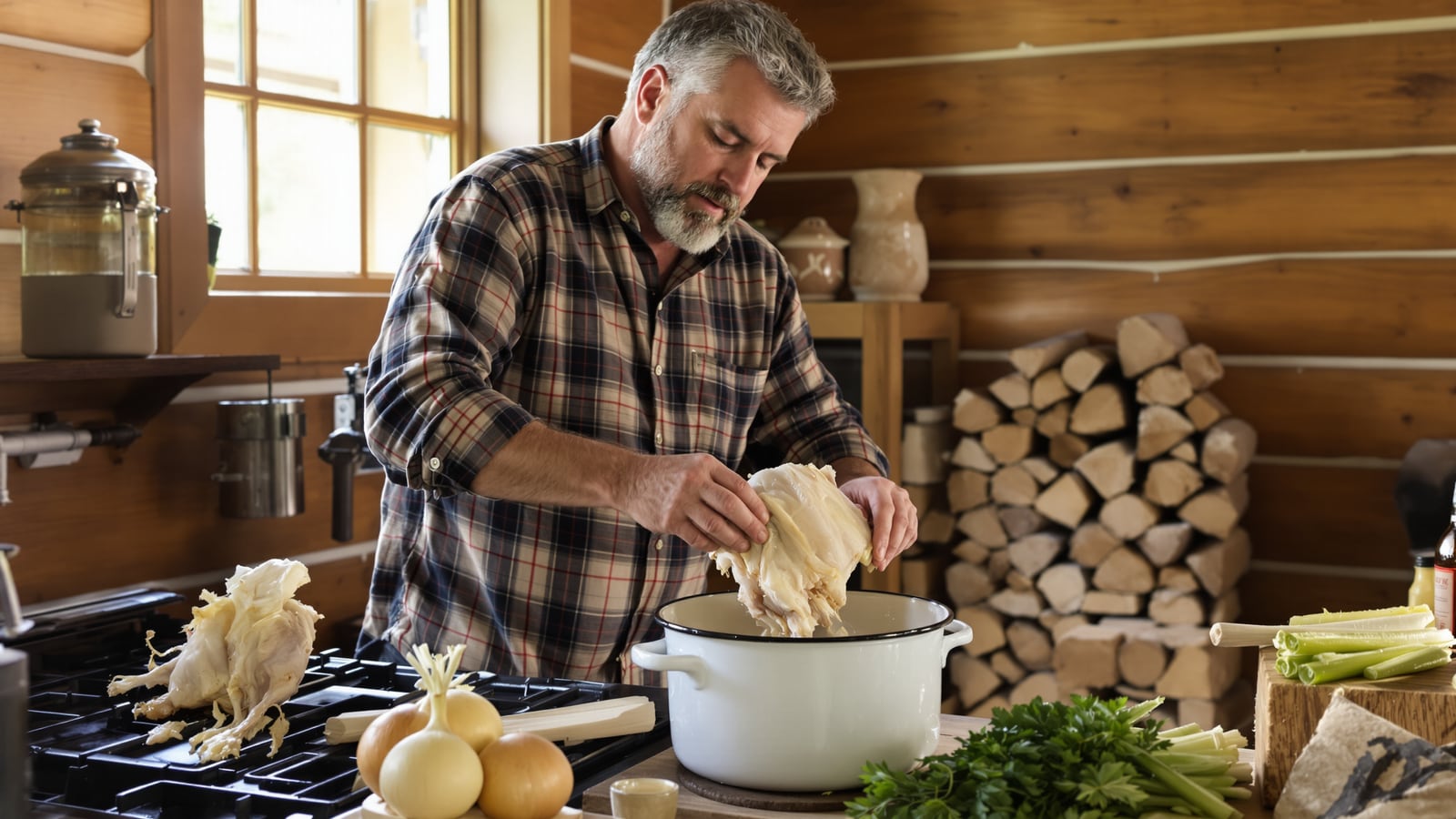
Quick answer: Pick the meat off while the bird's still warm. Cover the bones with cold water, hold it at a bare simmer for about three hours, and don't salt it. Chill it fast. Soup is twenty-five minutes after that.
Most people carve the breast, eat the thighs, and walk the carcass to the trash like it's done something wrong. It's the best part of the bird. Everything that makes stock worth making is in those bones: collagen, marrow, the browned bits stuck to the cavity. You paid for it. Use it.
Strip it while it's warm
Do this the same night, not the next morning. Warm meat comes off the bone in sheets. Cold meat fights you, and a cold bird that sat out on the counter is a food safety problem anyway. Get the leftovers into the fridge within two hours of the meal.
Pull every scrap of meat into a container. Dark and white together. Don't be precious about it. Then leave on the skin, the wing tips, the back, the neck if you've got it, and any jelly-like drippings from the pan. That's the flavor you're after.
If you can't make stock that night, put the carcass in a zip bag in the freezer. It'll keep for weeks, and a freezer bag of carcasses is how people end up making stock from two birds at once, which is better stock.
Cold water, bare simmer
Put the carcass in a pot just big enough to hold it. A 4-quart pot works for one bird. Add one onion, halved and left in its skin, which gives color. Add two carrots and two celery ribs, roughly chopped, a couple of bay leaves, eight or so peppercorns, and the stems from a bunch of parsley if you have them.
Cover with cold water. Just cover. Three quarts is plenty. Too much water gives you a thin, sad stock, and you'll end up boiling it down to fix the mistake.
Cold water matters. Starting hot seals the surface of the bones and drives the proteins out into a scum you'll be fighting for the next hour. Start cold, bring it up slowly, and skim the gray foam off once in the first twenty minutes.
Then turn it down. You want the surface barely trembling, a bubble breaking every second or two. If it's rolling, it's too hot.
Three hours is right for a roasted carcass. Two gets you something decent. Four won't hurt it. Past that the flavor starts tasting flat and tired.
What goes wrong
It's cloudy and greasy. You boiled it. A hard boil whips the fat into the liquid and breaks the proteins into tiny particles that never settle. It's still edible. It just won't look or taste clean. Next time, lower the flame.
It tastes like nothing. Usually too much water, or it only simmered for forty-five minutes. Fix a weak batch by simmering it uncovered until it reduces by a third.
It tastes like boiled vegetables. Too many vegetables, cut too small, or cooked too long. Stock is a chicken product with a supporting cast. Keep the vegetables to roughly what's above and cut them big.
It tastes salty and you can't use it. You salted it. Don't. You're going to reduce it, season it in a soup, or turn it into gravy later, and salt concentrates. Salt the finished dish. A pot of stock you salted at the start only works for one recipe, and probably not the one you wanted.
Strain, chill, and use the fat cap
Pull out the big pieces with tongs, then pour the rest through a fine strainer into a clean container. Throw out the spent vegetables and bones. They gave everything they had.
Now cool it quickly. A deep pot of hot stock stays warm in the middle for hours, and that's an invitation. Pour it into shallow containers, or set the pot in a sink of ice water and stir it for ten minutes. Once it's cool, into the fridge.
By morning, the fat will be a white layer on top. Leave it there. It seals the stock underneath and keeps it fresh. Stock under its fat cap holds in the fridge for about four days. Longer than that, freeze it.
Freeze it in useful sizes. Two-cup deli containers are good. So is a muffin tin: freeze, pop out the pucks, bag them. A puck is about a half cup, which is a pan sauce or the start of a rice dish. Frozen stock keeps its quality for around three months.
When it's jellied in the fridge, don't worry. That's the collagen. It means you did it right.
The soup: twenty-five minutes
Soup is where the stock earns its keep, and where most people ruin the chicken they saved.
- Warm a spoonful of that chicken fat, or oil if you'd rather, in a pot. Cook a diced onion, carrot, and celery until soft and sweet, about eight minutes. Don't rush them. This is the part that separates soup from hot chicken water.
- Add garlic for thirty seconds, then about six cups of stock. Bring it to a simmer.
- If you're adding rice, small pasta, or potatoes, put them in now and cook until just tender.
- Add the chicken in the last three minutes. Not before. Cooked chicken that simmers for twenty minutes turns to stringy rags.
- Taste it. Now salt it. Finish with black pepper and the juice of half a lemon.
That lemon is the line between a soup you eat and a soup you remember. Acid wakes up everything the long simmer made quiet.
One note on noodles. If you're making soup for leftovers, cook the noodles separately and add them to each bowl. Left to sit in the pot, they drink the broth and swell into mush by morning.
Nothing wasted
The skin you pulled off can crisp in a hot pan for a snack. The fat you skimmed off the chilled stock is schmaltz, and it's the best thing you can fry an egg or a potato in. A Parmesan rind dropped into the soup pot gives it body, if you've got one.
And the bones, once they've done their work, have nothing left. Send them to the compost or the trash with a clear conscience.
If you're building a week around a single bird, the Sunday roast that leaves your afternoon alone is a good place to start. It pairs well with cooking components, not meals, which is how a stock puck in the freezer turns into Wednesday dinner. And if you're stretching a grocery budget, feeding a family well when money's tight covers the rest of the math.
One bird. Dinner the first night, a pot of soup two days later, a freezer full of stock, and a jar of fat. Your grandmother did it without thinking. It's worth thinking about again.
Wes Dunbar
Country & Skills
Grew up on an acreage and never quite left. Covers trucks, trades, land, and how to do the thing yourself.

Watch
Worth an hour of your evening
More from Food.
From channels we rate. Plays on YouTube.
Read next