

Winter Bass Are Still Eating. You're Just Fishing Too Fast.
Cold water doesn't shut bass down. It makes them lazy and bunched up. Find the deep spot they're stacked on, then fish it slower than feels sane.
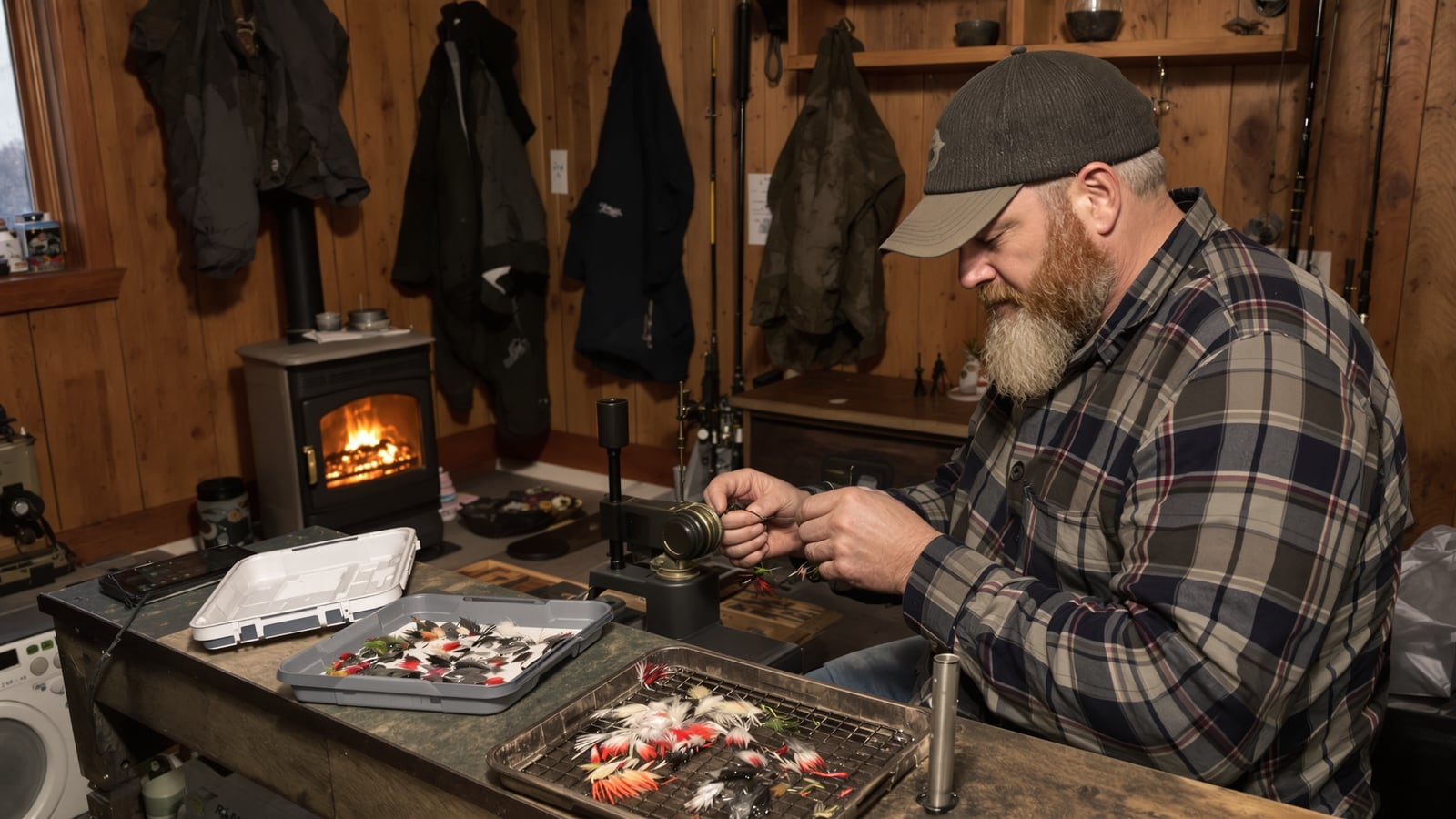
Quick answer: When the water drops into the 40s, bass move to the first deep water near where they spent the fall and bunch up there. Find that spot, put a compact bait on the bottom or just above it, and work it at half the speed you think is reasonable. Then pause. The bite comes in the pause.
The mistake is covering water
Most of us learned bass fishing in May. You throw a moving bait, you cover a bank, you find the aggressive fish and ignore the rest. It works because warm bass are scattered and hungry.
Take that habit to a 41-degree lake in January and you'll fish all day and catch nothing. You won't have missed the fish. You'll have run a fast bait past a fish that wasn't going to chase it.
Cold water doesn't make bass dumb. It makes them frugal. Their metabolism drops, and a bass will spend a little energy only when the meal is easy and right in front of it. A bait that has to be chased is a bad deal. A bait hanging in its face is a fine one.
The upside is that bass bunch up in winter. When you catch one, there are usually more within a few casts. One good spot can carry a whole morning, which beats driving around.
Where they go
Think deep, but not the deepest water in the lake. Bass want a nearby drop-off, a place to move up or down a few feet without swimming across the lake.
On most reservoirs, look for:
- Channel swings. Where the old creek or river channel bends tight against a bank, fish stack on the outside edge.
- Steep bluff walls and rock ledges. Rock holds a little heat from the sun, and the wall gives fish a quick depth change.
- Points that run out toward deep water. Fish the end and the sides, not the shallow top.
- Deep brush, stumps or docks over deep water. Anything that breaks up an otherwise bare bottom.
Depth varies by lake and by clarity. On many reservoirs the fish hold in 20 to 35 feet in the coldest weeks, and clear water often pushes them deeper. Northern smallmouth lakes tend to put fish on rock near the deepest basin they can reach. Treat these as starting points, not promises.
Don't ignore the afternoon. On a sunny day, a shallow flat next to deep water can warm a degree or two by 2 p.m. and pull a few fish up. Fish deep in the morning, then check the shallower edge of the same break later.
Use the electronics for what they're good at
Winter is when a fish finder earns its place on the dash. You're looking for two things: a hard edge on the bottom, and a clump of marks near it. A tight cluster hugging the bottom is bass or bait. A cloud of small marks above it's baitfish, and bass are often under it.
If you need help reading the screen, this guide to reading a fish finder covers the parts that matter and the features you can ignore.
No boat? Bank anglers do well on lakes with a steep bank. Look for a spot where the shoreline falls off fast, since your cast can reach the deep water without much distance.
Four baits, and how each one gets fished
Jigging spoon. A three-quarter-ounce spoon is a good all-around size. Drop it to the bottom, lift the rod tip two or three feet, and let it flutter back on a semi-slack line. Most bites come on the fall. Then pause and let it sit.
Blade bait. Same idea, but you can also snap it a few inches and let it vibrate. It's compact and heavy, so it stays in the strike zone. Fish it right off the bottom.
Jig with a small trailer. A half-ounce football or standard jig, in brown or green pumpkin, dragged a few inches at a time. Pause longer than feels natural. A jig that barely moves is often the one that gets eaten.
Suspending jerkbait. Better in the 40s than the 30s. Reel it down, twitch it twice, then stop. Let it hang for ten seconds. If nothing happens, try twenty. Be patient to the point of being uncomfortable.
Match the bait to the mood. Dead-still fish get the jig. Fish that show on the screen a few feet off the bottom get the spoon or the jerkbait.
Slow is a technique
Fishing slow doesn't mean fishing lazy. You're paying close attention to a bait that's barely moving.
Count your pauses out loud if you have to. Then watch the line. Cold-water bites are often a tick, a mushy feeling or just extra weight. You won't get the hard thump you know from summer.
When the line jumps or the rod feels heavier, set the hook. Reel down and sweep, don't snap. A cold bass often just holds the bait and doesn't run with it.
A few smaller points:
- Line. Eight to twelve pound fluorocarbon is a common choice for spoons and jigs, because it's low-stretch and sinks.
- Rod. Medium-heavy with a fast tip. You want to feel the bottom and still move a fish out of cover.
- Hands. A pair of thin gloves with the fingertips cut off, or a fingerless style, keeps you feeling the line. Numb fingers miss bites.
Cold water is real water
A winter boat day carries more risk than a summer one. Cold water takes your breath and your strength in minutes, so wear a life jacket the whole time, not just in the boat. Dress in layers, keep a dry change in a bag, tell someone where you're going and when you'll be back, and don't wade steep banks or walk on ice you haven't confirmed is safe through local knowledge.
If someone goes in, get them out, get them warm and get medical help right away.
Release it right, or keep it
Winter changes how you handle a fish. Air that's below freezing can hurt a wet bass fast. Keep the fish in the water until you're ready for a photo, take it quickly, and put it back. Wet your hands first. How to Release a Fish So It Actually Lives covers the details, and they matter more when it's cold.
Some anglers keep a bass for the table where it's legal, and that's a perfectly good choice. Release is respected and so is keeping. Both are part of the tradition.
Regulations differ by state and province. Check your local rules for open seasons, size and slot limits, and any special winter closures or catch-and-release-only periods. Some provinces and some waters close bass fishing altogether over the winter. Size Limits, Slot Limits and the Rules That Keep Fish Coming explains how those limits work, and your state or provincial wildlife agency publishes the current ones.
One more thing. Leave the ramp or the bank cleaner than you found it. Pick up the old line and the empty cups, even the ones that aren't yours. Frozen fingers make it tempting to skip. Do it anyway.
What a good winter morning looks like
Get to the water late, since the fish won't mind. Find a deep break, fish it for an hour without moving, and count your pauses. If a bass hits, stay put and drop the bait in the same spot.
You'll likely go home with fewer bites than you'd get in June. But the fish you do catch will feel better, because you earned each one by doing something most anglers won't: sitting still.
Wes Dunbar
Country & Skills
Grew up on an acreage and never quite left. Covers trucks, trades, land, and how to do the thing yourself.

Watch
Watch how it's done
Picked for this article.
From channels we rate. Plays on YouTube.
Bass University
How to Catch Bass in Cold Winter Water
BassGeek
COLD WATER BASS Are Easier to Catch Than You Think!
Read next